
for Schools, Teachers & Sport
Develop talent without breaking it.
Help every educator and coach see past behavior to the child underneath, and meet each one where they actually are.
The classroom problem
The classroom problem
A classroom hands one map to thirty different children, then measures them all against it. The quiet thinker, the natural leader, the child who needs to move: each gets read through the same lens, and behavior becomes the thing we manage instead of the child we understand.
DiamondDoughKid gives schools a shared language for difference, so teachers can stop firefighting behavior and start developing people.
What it gives educators

See the nature, not just the behavior
Understand why a child acts as they do.

Meet each child where they are
Differentiate with intention, not guesswork.

Reduce conflict
Fewer clashes when needs are understood early.

Spot and protect talent
Recognize potential before it’s mislabeled.

for Sport & Talent Development
The principle, louder
The top is reached by becoming more yourself, not less.
The same principle that quietly shapes a six-year-old runs the elite end of performance too: athletes, founders and leaders who reach the top and stay whole did it by becoming more authentically themselves. In academies and talent programs, that’s the difference between developing a person and burning out a prospect.
DiamondDoughKid brings that understanding to coaches and talent staff, so you can push for excellence without asking a young person to abandon who they are.
What it gives educators

For teachers
A practical lens for daily teaching and classroom dynamics.

For schools
A shared framework across staff, pastoral care and parents.

For academies & sport
Talent development that protects wellbeing and identity.
Outcomes

Stronger engagement and fewer behavioral clashes
Better wellbeing and belonging
Talent that’s developed, not broken
A common language between school and home
Bringing it in
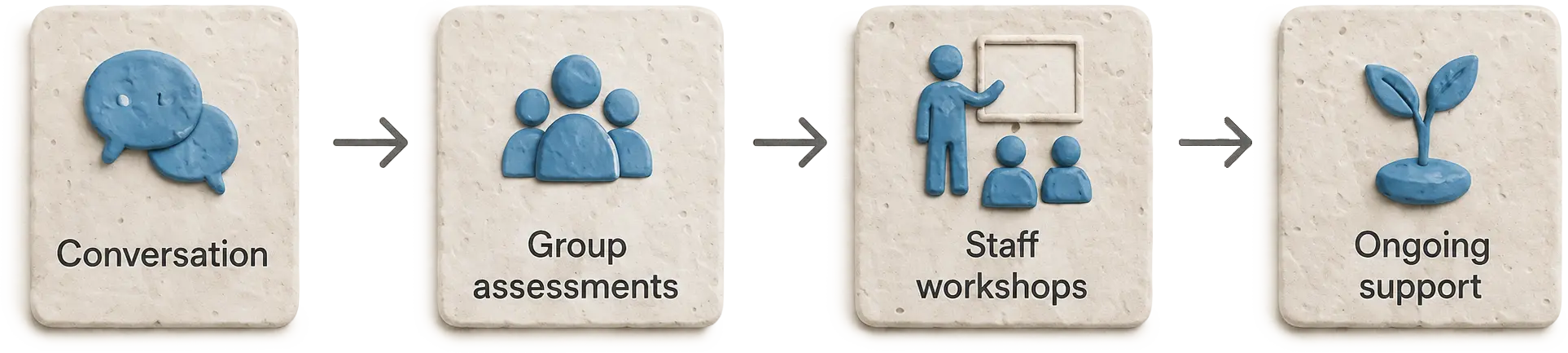
Most schools and academies start with a conversation. From there we shape the right mix of group assessments, staff workshops, and ongoing support to fit your setting and goals.

Develop the whole child.
Most schools start with a conversation.